In This Article
Some horses take a grooming session like a spa day. Others take it like an audit. If yours pins its ears at the first stroke, twitches along the flank, or goes stiff the moment a brush crosses the barrel, you’re likely dealing with thin skin, and the brush in your hand matters more than you’d think.
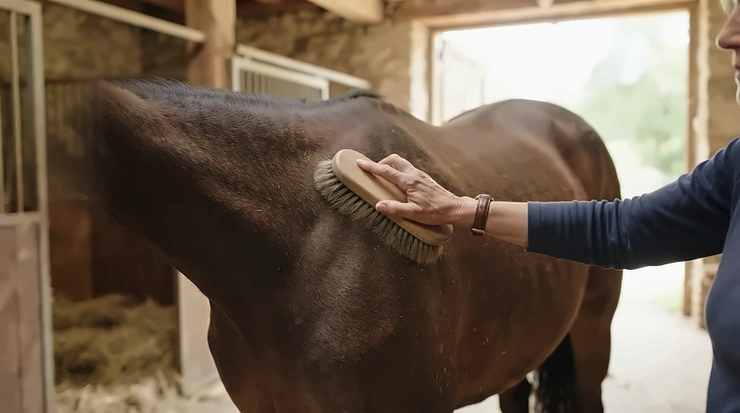
A soft body brush for thin-skinned horses is the tool that lets you finish a groom without a fight. Thoroughbreds, Arabians, freshly clipped horses and seniors often have skin that reacts to anything coarse. The right brush lifts dust, spreads coat oils and leaves a polished finish. The wrong one feels like sandpaper to the horse.
This guide covers seven real, well-known options across budget, mid-range and premium tiers. It explains what each bristle type actually does, and how to match a brush to your horse’s skin, coat and show schedule. It also covers the care habits that keep a good brush performing for years. Prices below are ranges only, so always check current pricing and availability before you buy.
Quick Comparison Table: Best Soft Body Brush for Thin-Skinned Horses
| Product | Bristle Type | Best For | Price Range |
|---|---|---|---|
| LeMieux Flexi Goats Hair Body Brush | Goat hair, flexible body | Sensitive or clipped horses | Mid-$20s |
| Haas Grundy’s Finest Body Brush – Soft | Soft bristle mix | Tender areas, fresh clips | High-$20s |
| Haas Body Brush ‘Country’ | Pure boar bristle | Thicker coats, show-day shine | Mid-$20s |
| LeMieux Flexi Soft Body Brush | Synthetic | Budget everyday finishing | Roughly $15-$20 |
| Kentucky Horsewear Overall Brush Body Soft Shine | Horsehair edge, vegan sheepskin center | Gloss with extra softness | $35-$45 range |
| Decker Equine Face Brush | Extra-soft synthetic | Faces, ears, light touch-ups | Budget end |
| Horze Maddox Leather Handle Body Brush | Soft synthetic | Easy-clean daily use | Around $20 |
Read the table as a map of trade-offs. The LeMieux Flexi Goats Hair Body Brush and Haas Grundy’s Finest Body Brush – Soft are the most obviously aimed at delicate skin. The Haas Body Brush ‘Country’ sits at the firmer, show-polish end, so it suits sturdier areas and heavier coats rather than the tender zones. Synthetic options like the LeMieux Flexi Soft Body Brush and Horze Maddox Leather Handle Body Brush win on price and cleaning ease. If you only buy one, the goat hair or soft-mix pick is the safest start for a truly reactive horse.
💬 Just one click — help others make better buying decisions too!😊
What Is a Soft Body Brush for Thin-Skinned Horses?
A soft body brush for thin-skinned horses is a short, fine-bristled finishing brush used after currying and dandy-brushing. Its bristles are soft enough to skim sensitive skin without irritation. They are dense enough to lift fine dust, spread natural oils and smooth the coat. It can be used over the whole body, including the face and legs.
That last point is what sets it apart. Extension grooming guides, such as this University of Kentucky 4-H grooming resource, describe the soft body brush as the one brush suited to the whole body. Wikipedia’s overview of horse grooming notes that body brushes come in natural hair (horsehair, goat hair, boar) or soft synthetic fibers, and that it is generally the last brush used. For a thin-skinned horse, that last step is often the most important one, because it is the only pass that never causes a flinch.
Top 7 Soft Body Brush for Thin-Skinned Horses: Expert Analysis
1. LeMieux Flexi Goats Hair Body Brush — ultra-soft and flexes with the horse
The headline here is flexibility. The body bends, so the bristles stay in contact with curved areas like the shoulder, hip and barrel instead of skating over them. That means fewer repeated strokes, which matters on a horse that tolerates grooming in short bursts.
The listed ultra-soft goat hair is positioned by retailers for sensitive or clipped horses and for removing fine dust. A wrist strap and ergonomic shape cut hand fatigue. On paper, goat hair gives you a very fine tip with enough density to polish rather than scratch. What the spec sheet won’t say is that goat hair is a finisher, not a cleaner. Use it after a medium brush has done the heavy lifting, or it will just push dirt around.
On review data, several retailer listings showed few or no reviews at the time of research, so there is little aggregated sentiment to report. Treat the retailer descriptions as manufacturer claims. This pick suits owners of Thoroughbreds, Arabians and freshly clipped horses who want a show-ring finish without drama.
Pros:
- ✅ Very soft goat hair suits sensitive skin
- ✅ Flexible body contours to shoulders and barrel
- ✅ Wrist strap reduces hand strain
Cons:
- ❌ Needs a prior brushing pass to be effective
- ❌ Natural hair needs more careful cleaning
Price range: mid-$20s, a fair value for a finisher you will use on every ride.
2. Haas Grundy’s Finest Body Brush – Soft — made for tender areas
This is the brush that most directly speaks to the keyword. Its maker markets it for thin-skinned horses, freshly clipped horses, older horses with thinner skin, and horses that object to being brushed. It uses a soft bristle mix with a polypropylene body, measuring about 200 × 85 × 45 mm and weighing roughly 212 g.
The practical meaning of “soft mix, dense enough to lift dust” is that the bristle field is not a single-texture compromise. The softer fibers protect skin while the denser portion still pulls fine dust and loose hair. The compact, light body also suits small hands and short sessions. Based on the spec comparison, it behaves as an all-rounder you can run along the belly, inner legs and shoulders without hesitating.
Verified review volume was limited in the sources checked, so no sentiment is claimed here beyond the manufacturer’s positioning. A good choice for horses coming back into work after clipping, or seniors whose skin has thinned.
Pros:
- ✅ Positioned specifically for thin skin and fresh clips
- ✅ Light, compact body for easy handling
- ✅ Made in Germany by an established brush maker
Cons:
- ❌ Imported, so stock can be inconsistent
- ❌ Higher price than basic synthetic brushes
Price range: high-$20s, justified if your horse reacts badly to anything coarser.
3. Haas Body Brush ‘Country’ — pure boar bristle for show-coat shine
Here is the firmer end of the range, and it deserves honesty. Haas describes this brush as ideal for horses with a stronger hair coat or for colder months. It has pure boar bristles, an oiled wood back and a leather strap, at about 7.9 × 3.35 inches.
Boar bristle is prized for shine because it spreads coat oils the way a boar-bristle human hairbrush does. For a thin-skinned horse, that makes it a finishing tool for sturdier areas and winter coats, not a face or flank brush. What most buyers overlook is that “natural” does not automatically mean “gentle.” Patch-test it on the shoulder and neck first, and watch the ears and tail swish.
Natural-bristle brushes also ask more of you. Equine trade writing has noted that natural bristles take more care to keep in shape, though the polish is considered worth the effort. If your horse tolerates it, the shine is hard for synthetics to match.
Pros:
- ✅ Pure boar bristle gives a classic polished finish
- ✅ Oiled wood back and leather strap feel premium
- ✅ Good for heavier or winter coats
Cons:
- ❌ Firmer feel, not for tender zones
- ❌ Needs regular cleaning and drying
Price range: mid-$20s, strong value for coat-polishing power when used selectively.
4. LeMieux Flexi Soft Body Brush — best budget flexible finisher
The twist here is price versus design. You get the same flexing-body idea as the goat hair model, but with synthetic bristles that retailers describe as comfortable yet efficient. An elasticated strap and ergonomic grip keep it secure in a gloved or damp hand.
Synthetic bristles shine at one thing: consistency. They don’t absorb moisture, they dry fast, and they shrug off disinfectant. That makes this a sensible second brush for multi-horse barns where cross-contamination is a worry. On paper it will not replicate the deep gloss of boar or goat hair, but it lifts surface dust and loose hair without drama, and it keeps a thin-skinned horse relaxed.
Aggregated review data was thin across the listings checked, so no sentiment is summarized. A smart pick for students, lesson barns and anyone building a kit on a budget.
Pros:
- ✅ Flexible body reaches awkward contours
- ✅ Synthetic bristles dry and clean quickly
- ✅ Budget-friendly entry point
Cons:
- ❌ Less natural shine than boar or goat hair
- ❌ May feel slightly firmer on very reactive horses
Price range: roughly $15-$20, an easy-to-justify value buy.
5. Kentucky Horsewear Overall Brush Body Soft Shine — horsehair edge, vegan sheepskin core
This hybrid is built around a clever idea. Real horsehair edges lift and remove dirt, while a vegan sheepskin interior pampers the coat and distributes skin oils for shine. The oval shape measures about 100 mm wide, 70 mm high and 210 mm long.
The practical read: the sheepskin-style center does the gentle polishing, the edges do the work. That gives you two textures in one pass, which is useful for owners who don’t want to carry both a polisher and a body brush. One honest caveat for vegan shoppers: the edges are real horsehair, so this is not a fully vegan brush. It is a softer-feeling alternative to a plain bristle field, not a synthetic one.
No consolidated reviews were verified for this product, so consider the manufacturer’s claims as unconfirmed. Best for show-prep owners who want extra gloss and extra softness together.
Pros:
- ✅ Dual-texture design polishes and cleans
- ✅ Vegan sheepskin center is plush on skin
- ✅ Oval shape fits the hand comfortably
Cons:
- ❌ Horsehair edges mean it is not fully vegan
- ❌ Priciest option in this list
Price range: $35-$45, worthwhile if you want a single show-day finisher.

6. Decker Equine Face Brush — extra-soft synthetic for faces and ears
Every thin-skinned horse is thin-skinned somewhere specific, and for most it is the face. This small synthetic brush is designed to be gentle around the face of large animals. It has a wood block for durability and is meant for dusting, light brushing and touch-ups.
The small form factor is the real feature. A full-size body brush around the eyes and muzzle is clumsy, and clumsy is how horses become head-shy. Equine trade writing has made the same point, that a dedicated face brush is a sound investment for sensitive horses. Think of it as the precision instrument in the kit.
Sources did not provide verifiable review aggregates, so none are claimed here. Great as a companion to any larger brush on this list rather than a stand-alone solution.
Pros:
- ✅ Extra-soft synthetic suits delicate facial skin
- ✅ Small size gives precise control
- ✅ Wood block feels sturdy
Cons:
- ❌ Too small for full-body grooming
- ❌ Limited shine compared with natural bristles
Price range: check current price, but it sits at the budget end of the category.
7. Horze Maddox Leather Handle Body Brush — easy-clean synthetic everyday brush
The standout is the hand feel. A plastic back with a PU leather insert and a nylon handle gives you a secure grip, and the soft synthetic bristles are described as removing surface dust and adding shine. That makes it a daily driver rather than a show-day specialty.
Synthetic bristles plus a plastic back means you can scrub it clean without worrying about warping wood. For a barn that grooms a thin-skinned horse every day, that practicality counts. Compared with the goat hair models, the finish will be less silky, but the horse is likely to appreciate how predictable it feels.
No aggregated review data was verified, so none is reported. Best for riders who want a sensible, washable brush at a modest cost.
Pros:
- ✅ Soft synthetic bristles for surface dust
- ✅ Nylon handle gives a secure grip
- ✅ Plastic back cleans easily
Cons:
- ❌ Less show-ring gloss than natural options
- ❌ PU insert may wear with heavy use
Price range: around $20, solid everyday value.
Top 7 Specs at a Glance
| Product | Material | Notable Spec | Price Range | Best For |
|---|---|---|---|---|
| LeMieux Flexi Goats Hair Body Brush | Goat hair | Flexible body, wrist strap | Mid-$20s | Sensitive, clipped horses |
| Haas Grundy’s Finest Body Brush – Soft | Soft bristle mix | About 212 g, 200 × 85 × 45 mm | High-$20s | Tender areas |
| Haas Body Brush ‘Country’ | Boar bristle | Oiled wood back, leather strap | Mid-$20s | Thicker coats |
| LeMieux Flexi Soft Body Brush | Synthetic | Elasticated strap | $15-$20 | Budget finishing |
| Kentucky Horsewear Overall Brush Body Soft Shine | Horsehair and vegan sheepskin | 210 mm long oval | $35-$45 | Show gloss |
| Decker Equine Face Brush | Synthetic | Small wood block | Budget end | Faces and ears |
| Horze Maddox Leather Handle Body Brush | Synthetic | PU leather insert | Around $20 | Daily washable use |
Looking at the comparison above, the Haas Grundy’s Finest Body Brush – Soft and LeMieux Flexi Goats Hair Body Brush are the logical first buys for reactive horses, while the Horze Maddox Leather Handle Body Brush and LeMieux Flexi Soft Body Brush win on practicality. The Haas Body Brush ‘Country’ is the specialist, worth it only if your horse’s coat can handle boar. Budget-minded owners should note that Decker Equine Face Brush is a supplement, not a full solution.
How to Choose a Soft Body Brush for Thin-Skinned Horses
- Start with the horse’s reaction, not the label. Run your bare hand over the shoulder and flank. Flinching there means you need the softest bristles available.
- Pick bristle material by the job. Goat hair and fine horsehair polish, boar adds gloss on thicker coats, and synthetics clean easily and stay consistent.
- Match brush size to the area. A large body brush covers ground fast, but a small face brush gives control where the skin is thinnest.
- Check the grip. A strap or contoured handle keeps strokes light and steady, which prevents accidental pressure.
- Consider cleaning demands. Natural bristles need airing and gentle washing, while synthetics tolerate frequent disinfecting.
- Think about coat length. Clipped and fine summer coats suit the softest options, while winter coats can handle slightly denser fields.
- Plan the kit, not just the brush. The soft body brush is the last step, so you still need a curry and a dandy brush earlier in the routine.
Natural Boar Bristle Horse Brush for Show Coats
A natural boar bristle horse brush for show coats is the brush that earns its place on the day of the class. Boar bristle has long been a standard for finishing brushes, and equine trade writers have argued that natural-hair brushes can lay down a shine few synthetics match, even though they need more care.
The honest nuance is about skin. Boar is the firmest of the natural options, so on a thin-skinned horse it belongs on the neck, shoulder, hindquarters and other sturdy zones, with a softer brush reserved for the belly, inner thighs and head. Think of it like using a good hairbrush on your scalp versus on a sunburn.
For a show coat, the technique matters as much as the bristle. Curry first, flick with a dandy brush, then use long strokes in the direction of hair growth. Brands like Haas describe their boar brushes as cleaning and polishing without scratching, which fits that approach. Keep the pressure feather-light, and stop at the first sign of tension.
If your horse tolerates it, the Haas Body Brush ‘Country’ is the clearest example in this list. If not, the LeMieux Flexi Goats Hair Body Brush delivers a softer route to a similar sheen.
Vegan Synthetic Bristle Horse Brush
A vegan synthetic bristle horse brush solves two problems at once: ethics and upkeep. There are no animal-derived fibers, and the bristles don’t hold moisture the way natural hair can. That makes them easy to wash, quick to dry and resistant to bacterial buildup.
For thin-skinned horses, the key question is softness. Modern synthetic fibers can be extremely fine, and products like the LeMieux Flexi Soft Body Brush, the Horze Maddox Leather Handle Body Brush and the Decker Equine Face Brush all use soft synthetic bristles marketed for gentle dust removal. The trade-off is that synthetics typically polish a little less than boar or goat hair. They clean well, but they don’t build the same deep glow.
Be careful with the word vegan on hybrids. The Kentucky Horsewear Overall Brush Body Soft Shine has a vegan sheepskin center but real horsehair edges, so it is not fully vegan. Read the materials list before you buy.
In multi-horse barns, a washable synthetic brush is also a sensible health measure, because you can assign one brush per horse and disinfect it easily.
Fine Bristle Density and Why It Matters
Fine bristle density is the hidden spec behind a good soft brush. Density describes how tightly packed the bristles are, and fine bristles are thinner individual strands. Together they decide how the brush feels on skin.
A dense field of fine bristles spreads pressure across many tips, so each tip pushes very little. That is why a good finishing brush feels soft even when it is working. A sparse field of thicker bristles concentrates pressure on fewer points, which is how a brush becomes scratchy. Haas describes its Grundy’s Finest brush as soft but dense enough to lift dust and loose hair, which is exactly the balance a thin-skinned horse needs.
Density also affects spacing. Some brushes, like the Haas ‘Gold’ style, deliberately space their bristles a little for a springier action. That can feel lively on a sturdy horse but less forgiving on a sensitive one.
A quick test: press the brush against the inside of your wrist. If you can feel individual bristle tips, your horse probably can, too. For a deeper look at how different brush types are built, this Equisearch guide to dandy, body and mud brushes is a useful companion.
Dust Removal Brush: Getting the Fine Stuff Out
A dust removal brush earns its keep after the dirt has been lifted. Curry combs loosen mud and sweat, dandy brushes flick away the bulk, and the soft body brush clears the fine dust that sits close to the skin.
Why it matters for sensitive horses: fine dust and dander can irritate skin and dull the coat, and a horse with thin skin tends to show it sooner. Grooming guides describe the soft body brush as the tool that removes the last dust and smooths the coat, which makes it the natural dust removal brush in your kit.
Technique is simple. Use long, light strokes in the direction of hair growth. Wipe the bristles across a curry comb every few strokes so you are not re-depositing dirt. Finish with a clean cloth if you are heading into the ring. If you want a closer look at the standard sequence, this UNH Extension grooming guide explains the flicking action of the dandy brush that comes before it.
For tight spaces like the ears and muzzle, the Decker Equine Face Brush is the better dust remover, because its small size avoids pressure on bony areas.
Coat Conditioning Bristles
Coat conditioning bristles are the ones that do more than clean. Natural hair like goat, horsehair and boar, along with sheepskin-style fibers, helps distribute the oils your horse’s skin already makes. That is where the glow comes from, not from a product in a bottle.
Retail descriptions of finishing brushes make the same claim. A natural finishing brush is said to remove dirt and dander and spread the horse’s coat oils across the clean surface, producing shine. The Kentucky Horsewear Overall Brush Body Soft Shine leans on this idea with its sheepskin-style interior.
For a thin-skinned horse, the conditioning effect is best when it comes from softness, not pressure. Light, repeated passes beat one hard scrub. Keep the brush clean, because a bristle field loaded with old grease and dust will smear rather than condition.
Synthetics can still contribute. They don’t spread oils quite as well, but they remove the surface layer that blocks shine, which is half the battle.
Practical Usage Guide: Grooming a Thin-Skinned Horse Step by Step
1. Read the horse first. Watch ears, tail and skin twitches before you start.
2. Curry gently, if at all. Use a soft rubber curry on sturdy areas only, and skip bony spots entirely.
3. Flick with a soft dandy. Short motions, in the direction of hair growth, as outlined in the UNH Extension guide.
4. Move to the body brush. This is where your soft body brush for thin-skinned horses takes over, using long, light strokes over the whole body.
5. Switch to a face brush. Use something small around the eyes, ears and muzzle.
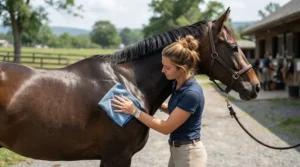
6. Finish with a cloth. A clean cloth lifts leftover dust and adds a final gleam.
Maintenance schedule: Clean the bristles after every use, wash natural brushes gently and let them dry bristle-down, and disinfect synthetics weekly in a shared barn.
Common mistakes in the first 30 days: pressing too hard, using one brush for every horse, and skipping the horse’s body language.
Problem-Solution Guide for Sensitive Horses
Problem: the horse flinches at any brush. Solution: switch to the softest option, such as the LeMieux Flexi Goats Hair Body Brush, and keep sessions to five minutes.
Problem: the coat looks dull even after brushing. Solution: add a conditioning step with natural hair or a sheepskin-style brush, and clean the bristles more often.
Problem: the horse is head-shy. Solution: use a dedicated face brush like the Decker Equine Face Brush, with slow, predictable strokes.
Problem: dust returns within hours. Solution: finish with long strokes in the direction of hair growth, then wipe with a cloth.
Problem: natural brushes keep getting ruined. Solution: switch to the Horze Maddox Leather Handle Body Brush or another synthetic you can wash freely.
✨ Don’t Miss These Exclusive Deals!
🔍 Take your grooming routine to the next level with these carefully selected brushes. Click on any highlighted item to check current pricing and availability. These tools will help you create a calm, glossy finish your horse will love!
Real-World Scenarios: Matching Brush to Horse
Scenario 1: the freshly clipped show Thoroughbred. The coat is short, the skin is exposed and every touch feels sharp. The Haas Grundy’s Finest Body Brush – Soft handles the tender areas, while a goat hair finisher adds shine before the class. Budget: moderate. Frequency: daily.
Scenario 2: the senior pony in winter. Thicker coat, thinner skin underneath. The Haas Body Brush ‘Country’ can polish the sturdy back and hindquarters, while a soft synthetic covers the belly and legs. Budget: moderate. Frequency: three to four times a week.
Scenario 3: the lesson barn with six horses. Hygiene and cost matter more than gloss. The LeMieux Flexi Soft Body Brush and Horze Maddox Leather Handle Body Brush are easy to wash, and one brush per horse limits cross-contamination. Budget: low. Frequency: daily.
The reasoning behind each pairing is the same: put the softest bristles where the skin is thinnest, and save firmer fibers for areas that can take them.
Soft Body Brush vs Dandy Brush vs Rubber Curry
| Tool | Bristle Feel | Main Job | Best For |
|---|---|---|---|
| Soft body brush | Fine, soft | Dust, polish, oils | Whole body, sensitive horses |
| Dandy brush | Longer, stiffer | Flicking away dirt | Sturdy body areas |
| Rubber curry | Rubber nubs | Loosening mud and hair | Muscled zones, not bony spots |
A soft body brush is the finishing tool, so it removes less dirt but gives more polish. The dandy brush does the bulk cleaning, and grooming guides generally advise avoiding it on the face because it can be too rough. A rubber curry sits earlier in the routine, loosening what the others sweep away.
The takeaway for thin-skinned horses is sequence. Use the gentlest version of each tool, and let the soft body brush do the final, skin-friendly work.
Common Mistakes When Buying a Soft Body Brush
Assuming natural means gentle. Boar bristle is firmer than goat hair, so check the material before you buy.
Buying one brush for everything. Retail grooming guides point out that a single all-purpose brush often does no job well, and a curry, a body brush and a finishing brush cover the basic stages.
Ignoring the face. A large brush near the eyes and muzzle can make a horse head-shy.
Skipping the patch test. Try any new brush on the shoulder first.
Neglecting cleaning. A dirty bristle field redistributes grime and dulls the coat.
Overspending on features you won’t use. A plush hybrid is lovely, but a simple synthetic may suit a pasture-kept horse better.
Long-Term Cost and Care of Your Brush
A good brush is a small investment with a long tail. Mid-$20s for a quality natural brush that lasts years works out cheaper per use than replacing bargain brushes every season. The real cost is care.
| Brush Type | Upkeep | Lifespan Driver | Value Note |
|---|---|---|---|
| Natural (goat, boar, horsehair) | Air-dry, gentle wash | Moisture damage | Best shine per dollar |
| Synthetic | Wash and disinfect easily | Wear on bristle tips | Best for shared barns |
| Hybrid | Spot-clean, avoid soaking | Glue and padding | Premium feel, higher price |
The table shows that natural brushes reward careful owners with shine, while synthetics reward busy ones with simplicity. If you groom daily in a damp barn, the washable option may deliver better long-term value. Whatever you choose, remove hair and dirt from the bristles after every use, and store brushes bristle-side down so they keep their shape.
FAQ
❓ What is the gentlest soft body brush for thin-skinned horses?
❓ Can I use a boar bristle brush on a horse with sensitive skin?
❓ Are synthetic horse brushes as good as natural ones?
❓ How often should I clean my horse's body brush?
❓ Do I still need a curry comb if I have a soft body brush?
Conclusion
Choosing a soft body brush for thin-skinned horses comes down to matching softness to skin, and finish to job. For the most reactive horses, the LeMieux Flexi Goats Hair Body Brush and Haas Grundy’s Finest Body Brush – Soft are the logical starting points. For show-coat polish on sturdier areas, the Haas Body Brush ‘Country’ and Kentucky Horsewear Overall Brush Body Soft Shine deliver depth. For daily practicality and easy cleaning, the LeMieux Flexi Soft Body Brush and Horze Maddox Leather Handle Body Brush are hard to fault, and the Decker Equine Face Brush covers the places most horses care about most.
Remember the bigger picture. The brush is only one part of a calm routine: read your horse, work in the right order, keep the bristles clean, and let the soft body brush have the final word.
Recommended for You
- Horse Grooming Kit for Trailer Travel: 7 Best Picks for 2026
- Grooming Kit for Kids Who Ride Ponies: 7 Best Picks in 2026
- Horse Grooming Kit for First-Time Horse Owners: 7 Best Picks for 2026
Disclaimer: This article contains affiliate links. As an Amazon Associate, I earn from qualifying purchases. If you purchase products through these links, we may earn a small commission at no additional cost to you.
✨ Found this helpful? Share it with your friends! 💬🤗
